top of page


lor audience segmentation
the challenge
The challenge was to segment users across multiple markets to enable more personalized communication and product recommendations. With a diverse customer base across regions, the goal was to better understand key differences in behavior, preferences, and motivations to guide marketing, design, and content decisions.
the
IDEA
The idea was to create detailed user personas by combining behavioral and attitudinal data. These personas would reflect key stages in the customer journey — such as non-buyers, first-time buyers, and repeat buyers — across two markets: the UK and Spain. The personas would help tailor content, offers, and product messaging to each segment.
the
Process
The process began with data collection from three sources:
• Blueconic: User behavior, product views, search terms, and visit frequency
• Google Analytics: Demographics, device type, traffic source, and affinity categories
• Usabilla Survey: Subjective feedback on goals, frustrations, and preferences
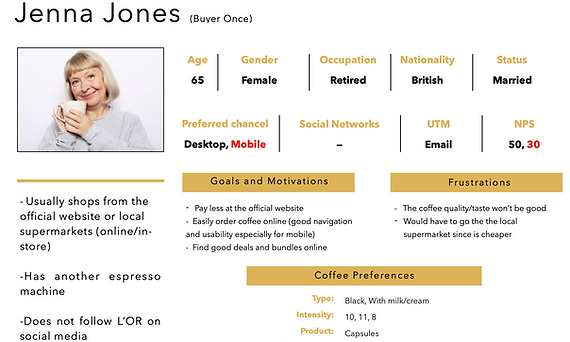
Based on pre-defined customer segments, three personas were created for each market. The data was analyzed, grouped, and synthesized into detailed profiles, which included goals, motivations, frustrations, coffee preferences, and preferred channels.
DISCOVERY & SYNTHESIS
During the discovery phase, data was collected from Blueconic, Google Analytics, and survey responses. Each source offered a different perspective — from behavioral data and visit patterns to user preferences and motivations.
Key trends were identified for each of the three user types (non-buyers, one-time buyers, repeat buyers) across both markets. These included differences in preferred channels, coffee preferences, and user frustrations such as price sensitivity or difficulty navigating the site on mobile.
This information was synthesized and grouped into six user personas. The synthesis helped ensure each persona was grounded in real data and represented distinct behaviors, needs, and attitudes.
Personas
Six personas were created in total — three for the UK and three for the Spanish market. They provided clear insights into user behavior and preferences, supporting content personalization, email targeting, and product recommendations. The personas also revealed common pain points, such as unclear messaging and difficulty using the site on mobile. Each profile included demographics, goals, frustrations, and coffee preferences, helping the team better understand user needs and make more informed design and marketing decisions. Below are a few examples of the final personas. These personas were later used to guide recommendations for product bundles, email targeting, and improvements to navigation and content relevance on the webshop.


bottom of page